On This Page
If you’ve been in the Antelope Valley for more than a few years, you’ve seen it: cars that were glossy five years ago now have chalky hoods, hazy roofs, and trunk lids that look almost matte. That’s UV damage, and it’s worse here than almost anywhere else in Southern California.
High-desert UV plus 60°F+ daily temperature swings break down clear coat years faster than coastal climates. Clear coat failure spreads. Fix it at the first sign of gloss loss and it’s a polish or a refinish; wait, and it’s a full respray.
→ send us photos: free written estimate, usually same day.Why Desert UV Is So Brutal
Three things make AV paint fail faster than coastal LA paint:
1. Elevation
Lancaster sits at about 2,300 feet. UV-A and UV-B intensity increases roughly 10–12% per 1,000 feet of elevation. Compared to sea-level Santa Monica, we get about 25–30% more UV exposure on the same vehicle, on the same day. Over years, that adds up dramatically.
2. Heat Cycles
Summer surface temperatures on a dark-painted hood in direct sun can hit 160–180°F. Then it drops to 60°F overnight. That’s 100°F+ of daily expansion and contraction. Clear coat, the outermost protective layer, flexes with that cycling and eventually develops micro-cracks that let moisture and UV reach the base color.
3. Dry Air and Abrasive Particles
Desert air is dry, and AV wind carries fine sand and dust. Over time these abrade the clear coat surface, accelerating clear coat failure. Combined with UV exposure, it’s a one-two punch.
The Stages of UV Damage
UV damage doesn’t happen all at once. It progresses through stages:
Stage 1: Loss of Gloss (Years 3–6 of New Paint)
Surface loses its mirror gloss. Color still looks correct, but the finish looks slightly dull. Usually fixable with machine polish and re-wax / re-ceramic.
Stage 2: Oxidation (Years 5–10)
Top of clear coat starts to break down. Surface becomes chalky-feeling to touch. Color starts to shift slightly. Machine polish can sometimes restore, if the clear coat hasn’t been polished too thin already.
Stage 3: Clear Coat Failure (Years 8–15)
Clear coat peels, lifts, or develops large hazy patches. Color underneath is exposed and oxidizing. Cannot be polished, the clear coat has to be sanded off and re-applied, often with a base color refresh.
Stage 4: Base Color Damage (Years 10+ of Severe Exposure)
Clear coat is gone. UV is hitting the base color directly. Color fades, paint dulls, eventually the metal underneath shows through. Full panel refinish (sand to bare metal, prime, color, clear) is the only path.
What Damage Looks Like on Your Car
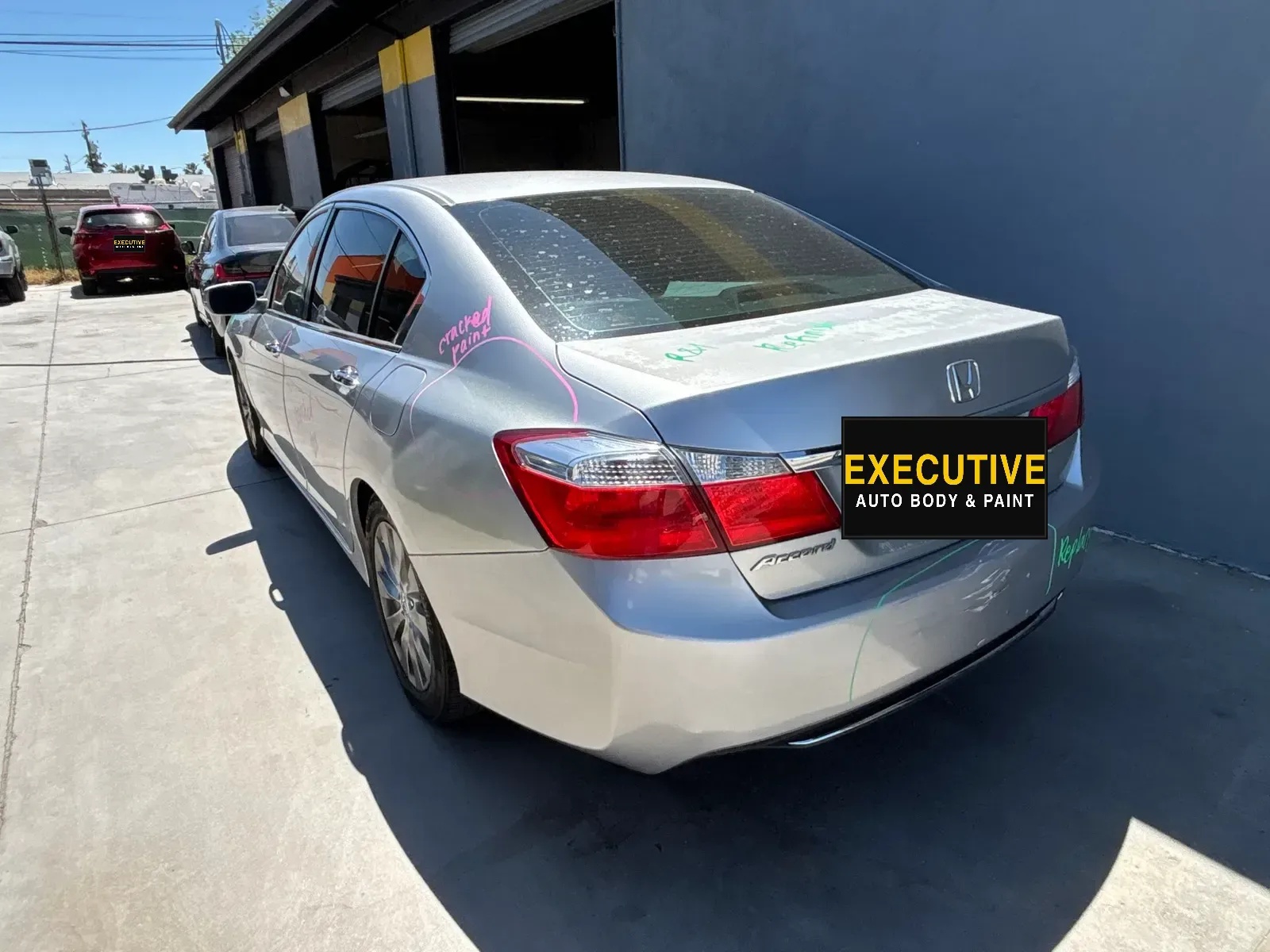
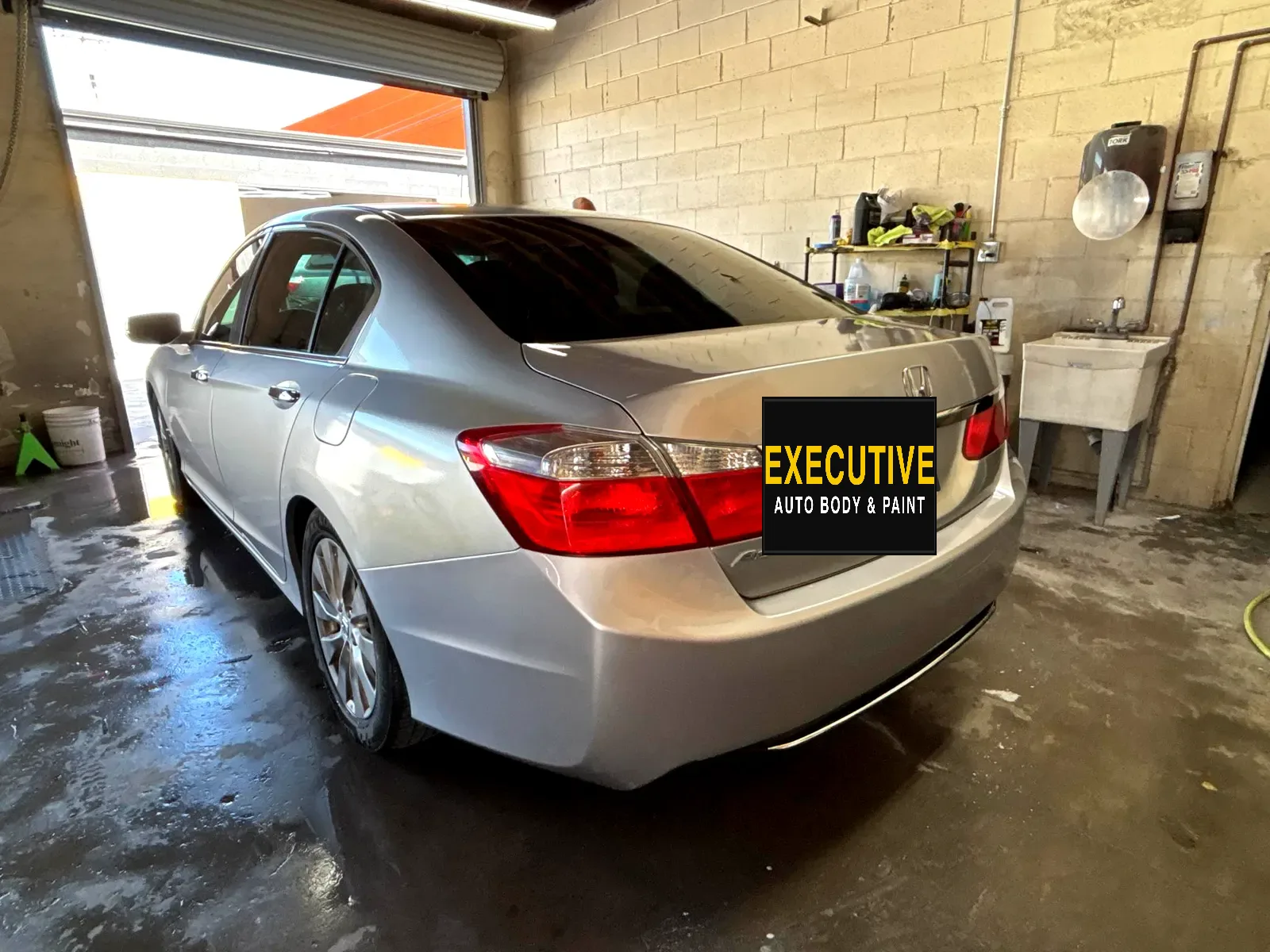
The panels that get the most direct sun fail first:
- Hood, full vertical sun all day. Hardest hit.
- Roof, close behind. The roof on a black car can be 180°F+ in summer.
- Trunk / rear deck, about as bad as the hood.
- Door mirror covers, small but very exposed.
Vertical surfaces (doors, fenders, quarter panels) typically last 2–3x longer than horizontal surfaces.
When to Repair
Stop ignoring it once you see:
- Chalky residue when you wipe a hood with a microfiber
- Visible clear coat peeling or lifting
- Hazy / cloudy patches on horizontal panels
- Color shift between sun-exposed and shaded panels
The earlier you address it, the less expensive the repair. Stage 2 oxidation can sometimes be polished. Stage 3+ requires refinish.
What a Proper UV-Resistant Refinish Looks Like
When we refinish a UV-damaged panel, we use:
- Sanding to clean substrate, sometimes to bare metal if base color is compromised.
- Etching primer + build primer, block-sanded smooth.
- Computerized color-matched base coat in multiple passes.
- High-UV-resistant clear coat, modern two-pack clears with HALS (Hindered Amine Light Stabilizers) and UV absorbers built into the formula.
- Booth cure to OEM hardness spec.
- Wet-sand and buff for mirror finish.
The clear coat we use is engineered for the kind of UV environment the AV throws at it, significantly better protection than the cheap clears used by lower-end shops.
How to Protect a Fresh Paint Job
- Garage if possible. Even partial garage time extends paint life dramatically.
- Wash regularly with proper products. Avoid abrasive automatic car washes; they scratch clear coat invisibly.
- Wax or ceramic coat. Both add a sacrificial layer that takes UV damage instead of the clear coat. Ceramic coatings last 1–3 years and provide significant UV protection, strongly recommended for the high desert.
- UV-protectant sprays on trim and bumpers (plastic ages faster than paint).
- Cover the vehicle if it'll sit outside for days at a time.
The TL;DR
AV sun is harsh. Most paint fades. When yours does, address it before it gets to bare metal, that’s when repair gets expensive. We can polish what’s polishable and refinish what isn’t, with UV-resistant clear designed for desert use.
Free estimate, bring us a photo of the worst panel and we’ll tell you honestly whether it’s polish or refinish.
“Expert quality repair. Made car look like new. Car returned crystal clean.”